What is the usable shelf area and total capacity?
“Capacity” can be misleading — always ask for actual shelf area in square metres and maximum loading weight per shelf. This determines your real throughput.
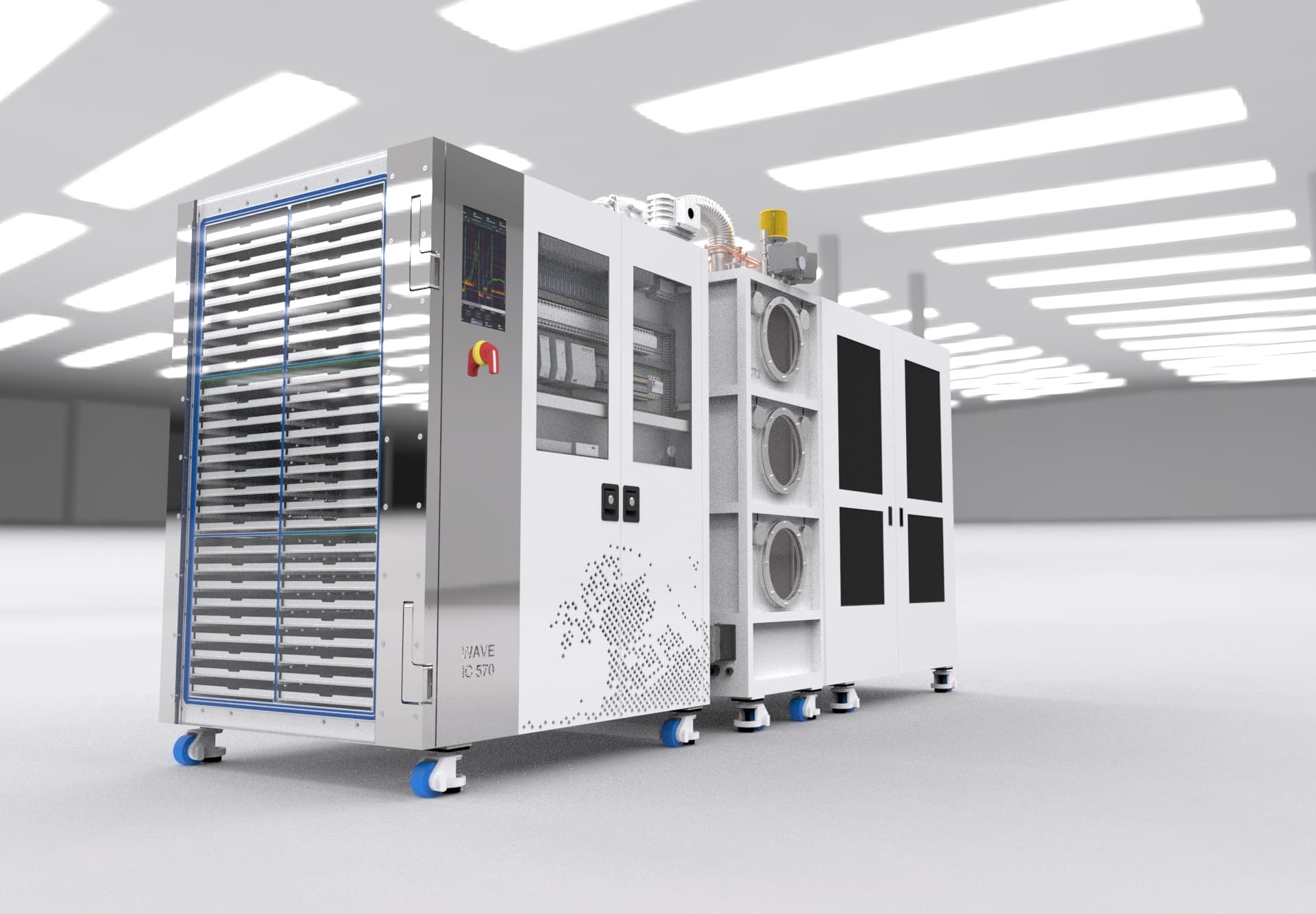
The key questions, specifications, and considerations every buyer should evaluate before investing in a commercial freeze dryer.
A commercial freeze dryer is a significant capital investment — and done right, one of the most profitable pieces of equipment you’ll ever buy. The technology turns perishable goods into shelf-stable, premium-priced products, fundamentally changing the economics of food production.
But not all freeze dryers are created equal. The difference between a well-engineered commercial machine and a cheap alternative shows up in cycle times, energy costs, product consistency, maintenance frequency, and ultimately — your bottom line. This guide helps you ask the right questions and evaluate the right specifications before committing.
The most common mistake buyers make is purchasing a machine that’s either too small (creating a production bottleneck from day one) or too large (paying for capacity they won’t use for years). Here’s how to size correctly:
Step 1: Define your weekly output target. How many kilograms of finished (dry) product do you need per week? Be realistic but ambitious — account for your growth plan over the next 2–3 years.
Step 2: Account for water loss. Fresh products lose 60–90% of their weight during freeze drying. If you need 50 kg of finished product per week, you need to load 150–500 kg of fresh product per week, depending on the product type.
Step 3: Calculate cycles per week. Most commercial operations run 2–3 complete cycles per week (each cycle takes 18–36 hours including loading, running, and unloading). Multiply your per-cycle fresh capacity by cycles per week to get weekly throughput.
| Business Stage | Weekly Output Need | Suggested Fresh Capacity |
|---|---|---|
| Startup / Testing | 10–30 kg finished | 50–100 kg per batch |
| Growing Business | 30–100 kg finished | 100–250 kg per batch |
| Established Producer | 100–300 kg finished | 250–500 kg per batch |
| Industrial Scale | 300+ kg finished | 500+ kg per batch (or multiple machines) |
Pro tip: It’s often better to start with a slightly larger machine than you think you need. A machine running at 70% capacity has room to grow. A machine running at 100% capacity from day one means you’ll need a second machine sooner than planned — and two small machines cost more to operate than one appropriately-sized machine.
The vacuum pump is the heart of any freeze dryer. It creates and maintains the low-pressure environment that makes sublimation possible. Look for pumps rated for deep vacuum (below 0.1 mbar) with proven reliability over continuous commercial operation. Oil-sealed rotary vane pumps are the industry standard for reliability and performance. Ask about pump maintenance intervals and replacement costs — a cheap pump that needs frequent rebuilding costs more over its lifetime.
The condenser captures sublimated water vapour and is the critical bottleneck in most freeze dryers. Its capacity (measured in kg of ice it can hold) must match or exceed the water content of your maximum batch. An undersized condenser forces you to run smaller batches or interrupts cycles for defrosting. Condenser temperature matters too — colder is better. Look for -50°C or lower.
Programmable shelf heating with precise temperature control separates commercial machines from basic units. The ability to set temperature ramp profiles — gradually increasing heat during primary drying — allows you to optimise cycle times for each product without risking collapse. Look for shelves that heat evenly across their entire surface and can hold temperatures within ±1–2°C of the setpoint.
For food production, the chamber and shelves must be food-grade stainless steel (304 or 316 grade). Welded seams should be smooth and accessible for cleaning. The door seal quality determines vacuum integrity — a poor seal means the pump works harder, cycles take longer, and energy costs increase. Ask to see the build quality up close and check welding standards.
Modern commercial freeze dryers should offer recipe storage (save and repeat optimised cycles for each product), real-time monitoring of shelf temperature, chamber pressure, and condenser temperature, and ideally remote access via IoT connectivity. The ability to review cycle data after completion helps you optimise processes over time. Data logging is also important for quality assurance and regulatory compliance.
Capacity: 3–15 kg per batch
Build: Often aluminium or lower-grade stainless
Vacuum: Basic pumps, limited deep vacuum
Controls: Pre-set cycles, limited customisation
Cycle times: Often 24–48 hours, less optimised
Use case: Personal use, hobby, very small-batch testing
Lifespan: 5–10 years typical
Capacity: 50–500+ kg per batch
Build: Food-grade 304/316 stainless steel
Vacuum: Industrial pumps, deep & stable vacuum
Controls: Fully programmable, recipe storage, IoT
Cycle times: Optimised per product, significantly shorter
Use case: Commercial production, food business, pharma
Lifespan: 15–20+ years with maintenance
Some sellers market oversized “home” freeze dryers as suitable for commercial production. While they might technically work, they lack the construction standards, food safety certifications, and engineering precision required for a real food business. Running a home machine 24/7 in a commercial setting typically voids the warranty and shortens its life dramatically. If you’re building a business, invest in a machine built for business.
The ROI calculation for a commercial freeze dryer is straightforward once you have the key numbers. Here are the variables that matter most:
Revenue per kg: What does your finished freeze dried product sell for per kilogram? This varies enormously — from $20/kg for commodity vegetables to $200+/kg for premium pet treats or specialty candy.
Raw material cost per kg (finished): Account for the weight loss. If you buy fresh fruit at $3/kg and lose 85% water weight, your raw material cost per kg of finished product is roughly $20/kg.
Operating cost per cycle: Energy (typically $20–80 per cycle depending on machine size and local rates), labour for loading/unloading and preparation, and packaging materials.
Cycles per week: With proper planning, most machines can run 2–3 full cycles per week. Higher utilisation = faster payback.
A machine producing 100 kg of fresh product per cycle × 3 cycles/week × 15% yield (85% water loss) = 45 kg finished product per week. At $80/kg retail for freeze dried fruit, that’s $3,600/week in gross revenue. Subtract raw materials ($300), energy ($150), labour ($400), packaging ($200) = ~$2,550/week gross profit. A $150,000 machine pays for itself in roughly 14 months. High-value products like pet treats or candy can cut that payback to under 12 months.
“Capacity” can be misleading — always ask for actual shelf area in square metres and maximum loading weight per shelf. This determines your real throughput.
The condenser must hold all the water from your maximum batch. Ask for kg ice capacity and minimum condenser temperature. Below -50°C is the standard for quality machines.
Deep, stable vacuum is essential for efficient sublimation. Look for systems that consistently reach below 0.1 mbar. Ask how vacuum performance changes over time with wear.
Shelf heating should be programmable with ramp profiles. Ask about temperature uniformity across the shelf surface — uneven heating means uneven drying.
Get real numbers in kWh per cycle for your target products. Energy is your largest ongoing cost — a 20% efficiency difference between machines adds up to thousands per year.
For food production: CE marking, food-grade materials certificates, and compatibility with HACCP requirements. For pharma: ask about GMP compliance and validation protocols.
Ask for a maintenance schedule: vacuum pump service intervals, condenser defrost requirements, seal replacements, and estimated annual maintenance costs. Factor this into your ROI calculation.
A freeze dryer is only as good as the operator. Ask about installation support, operator training, recipe development assistance, and ongoing technical support availability.
The best way to evaluate a machine is to see it in production at an existing customer’s facility. Ask for reference sites you can visit, or at minimum, speak with existing customers about their experience.
Commercial freeze dryers are often built to order. Ask about lead times, customisation options (chamber size, shelf count, door configuration, electrical requirements), and whether the manufacturer can adapt the machine to your specific production environment.
WAVE builds every freeze dryer to your specific requirements — capacity, product type, production environment, and growth plan. All custom-built in Vienna.
Schedule a ConsultationCommercial freeze dryers range from approximately $30,000 for small-batch machines (5–10 kg) to $500,000+ for large industrial systems (200–500+ kg). Evaluate cost per kilogram of finished product over the machine’s 15–20 year lifespan, not just the purchase price.
Calculate your weekly target output in kg of finished product, account for water loss (60–90%), and divide by cycles per week (2–3 typical). It’s usually better to size slightly larger than your current needs to allow for growth.
Well-run operations typically see payback in 12–24 months. High-value products (pet treats, specialty candy, premium coffee) achieve faster payback than commodity products. The key variables are product price, raw material cost, machine utilisation rate, and operating costs.
WAVE Advisor
Questions & advice · AI
AI advisor · prices are indicative; a binding quote comes from the WAVE team.