Does Freeze Drying Remove Nutrients? The Science, Explained
Freeze drying keeps far more of a food’s nutrition than any other preservation method — typically around 97%. Here’s exactly which nutrients survive, which don’t, and why freeze drying beats canning, dehydrating and even freezing.
In This Article
The Short Answer
Freeze drying removes water, not nutrition. Studies consistently show freeze dried foods retain roughly 90–97% of their original nutrients — dramatically more than dehydration (60–75%), canning, or long-term freezing. The reason is simple: freeze drying works cold and under vacuum, so it never applies the heat that destroys vitamins, enzymes and antioxidants.
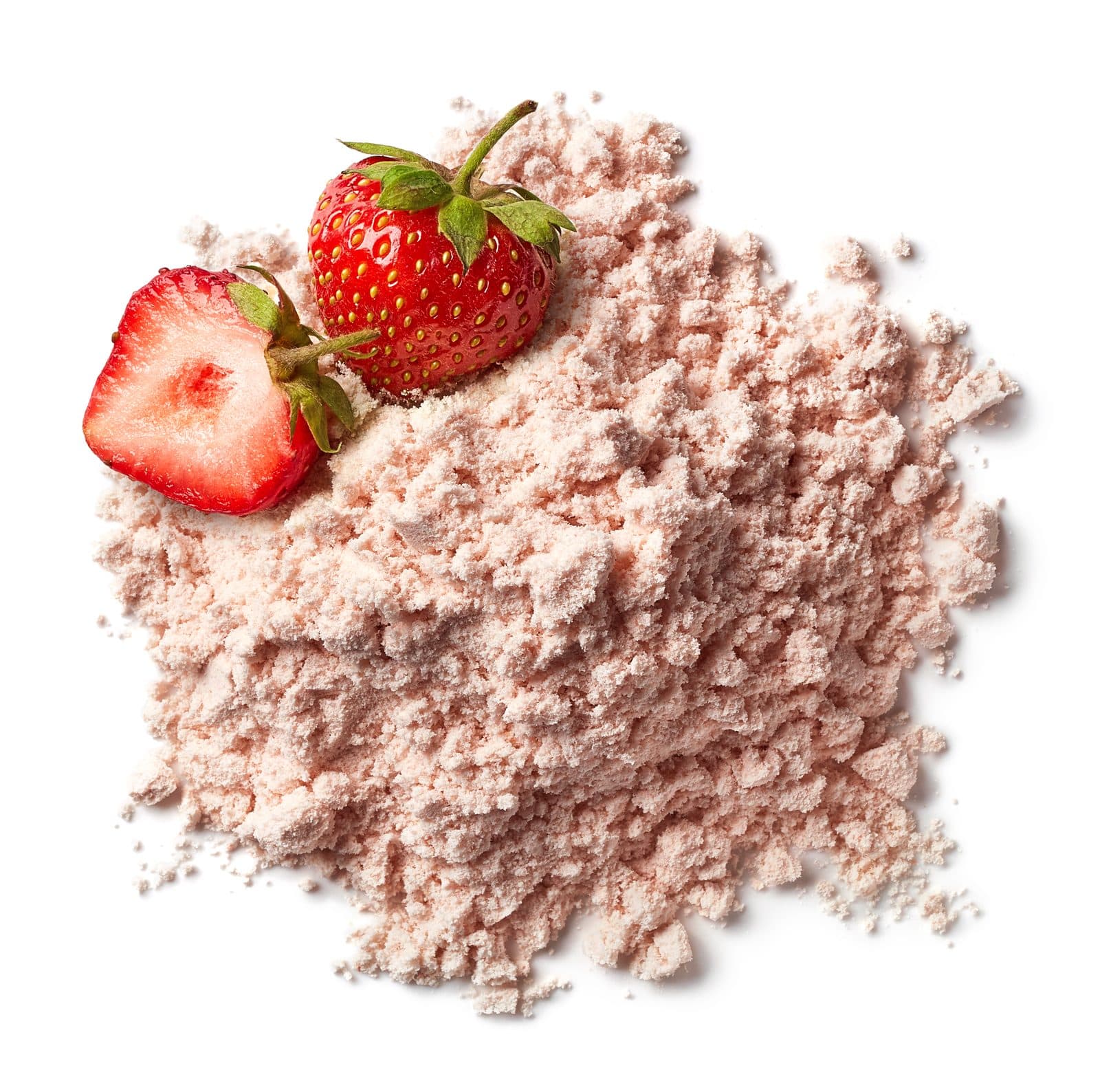
Bottom line: A freeze dried strawberry has almost the same vitamin C, fibre, minerals and antioxidants as a fresh one — just without the water. Rehydrate it, and you’re close to eating fresh fruit. The nutrients are concentrated, not lost.
Why Freeze Drying Preserves So Much
Most nutrient loss during food preservation comes from three enemies: heat, oxygen and time. Freeze drying minimises all three.
No heat damage
The product stays frozen throughout. Water is removed by sublimation — ice turning straight to vapour under vacuum — rather than by evaporation. Heat-sensitive nutrients like vitamin C, folate and many enzymes, which degrade rapidly when cooked or dehydrated, are largely spared.
Very low oxygen
The process runs under a deep vacuum, and the finished product is sealed with oxygen absorbers. Oxidation — which destroys antioxidants and fat-soluble vitamins over time — is drastically slowed.
Locked-in stability
With moisture down to 1–3%, the chemical reactions that degrade nutrients essentially stop. The nutrition present at the moment of freezing is held in place for years.
Which Nutrients Survive — and Which Don’t
No preservation method is perfect, but freeze drying comes closest. Here’s the breakdown.
Very well preserved
Fibre: essentially unchanged
Minerals: (iron, potassium, calcium) fully retained
Protein: retained, structure intact
Antioxidants: (anthocyanins, polyphenols) largely kept
Vitamin A & carotenoids: well retained
Most B vitamins: largely retained
Some loss
Vitamin C: small losses (still far better than heat drying)
Folate: minor losses
Live probiotics: partial survival (many strains tolerate it)
Volatile aromas: some loss, though flavour stays strong
Texture-bound water: removed by design (not a nutrient)
The losses that do occur are modest and mostly limited to the most fragile water-soluble vitamins. Everything structural — fibre, minerals, protein — comes through essentially intact.
Freeze Drying vs. Other Methods
Put side by side, the nutritional gap is stark:
Freeze drying
~90–97% nutrients retained. Cold, vacuum, no oxidation.
Dehydrating
~60–75% retained. Hours of heat degrade vitamins.
Canning
High heat + water leaching; heavy vitamin C and B losses.
Long-term freezing
Good initially, but slow nutrient decline and freezer burn over months.
For a fuller process comparison, see our guide on freeze dryer vs. dehydrator.
Does Freeze Drying Change Calories or Sugar?
Per gram, freeze dried food appears more calorie- and sugar-dense — but that’s only because the water is gone. Weigh out a freeze dried strawberry and it has more sugar per gram than fresh, simply because a fresh strawberry is ~90% water. Rehydrate it, and the numbers return to normal. Freeze drying concentrates nutrition and calories by removing water; it does not add sugar or calories, and it doesn’t strip them out either.
With the water removed, the natural sugars and flavours are concentrated into a smaller, crisp bite — so it tastes intensely sweet even though no sugar was added. This is also why freeze dried snacks feel so flavour-dense.
Getting the Most Nutrition Out of Freeze Drying
To preserve the maximum nutrition, the details of the process matter:
Start fresh
Nutrition can only be preserved, not created. Freeze dry produce at peak freshness, since nutrient levels are highest then.
Freeze fast, dry properly
Rapid freezing and a correctly run cycle protect cell structure and minimise the exposure that causes the small vitamin losses.
Seal against moisture and oxygen
Package with a moisture barrier and oxygen absorbers. Nutrient retention over the 25-year shelf life depends on keeping air and humidity out.
Frequently Asked Questions
Does freeze drying remove nutrients?
No — freeze drying removes water, not nutrients. Freeze dried foods typically retain around 90–97% of their original nutrition, far more than dehydrating (60–75%) or canning. Because the process is cold and oxygen-free, heat-sensitive vitamins, antioxidants, minerals, fibre and protein are largely preserved.
Does freeze drying fruit remove nutrients?
Only minimally. Freeze dried fruit keeps almost all of its fibre, minerals, antioxidants and most vitamins. There are small losses of the most fragile water-soluble vitamins like vitamin C, but far less than with any heat-based method.
Is freeze dried food as healthy as fresh?
Nutritionally it’s very close. Once rehydrated, freeze dried food is nearly equivalent to fresh, retaining the large majority of its nutrients. It’s significantly healthier than canned or dehydrated alternatives.
Does freeze drying kill vitamins?
It reduces only the most heat- and oxygen-sensitive vitamins slightly (mainly vitamin C and folate). Most vitamins, along with minerals, fibre, protein and antioxidants, survive freeze drying largely intact.
Why does freeze dried food have more sugar per gram?
Because the water has been removed. The sugar isn’t added — it’s concentrated. Gram for gram there’s more sugar than fresh fruit, but rehydrating returns it to the original values. No sugar is added during freeze drying.