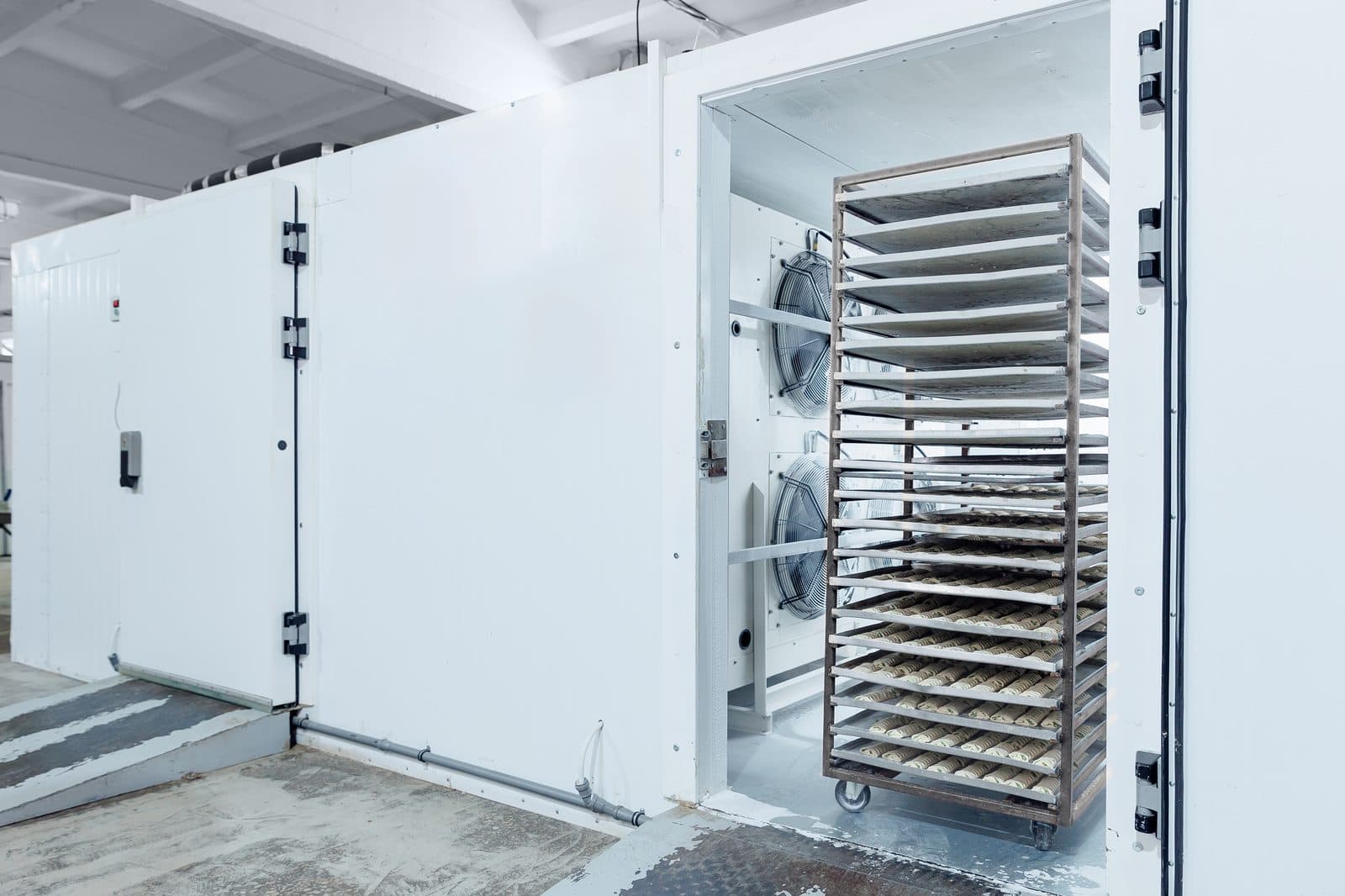
How Long Does Freeze Drying Take? Cycle Times Explained
Most freeze drying cycles run 12 to 36 hours — but the real answer depends on the product, the load and the machine. Here’s what drives cycle time and how to shorten it without ruining quality.
In This Article
The Short Answer
A typical freeze drying cycle takes 12 to 36 hours. Thin, simple products like sliced herbs or berries can finish in around 12 hours; dense, high-moisture or high-sugar products like complete meals can take 30 hours or more. The time isn’t fixed — it’s determined by how much water has to be removed, how easily that water can escape the product, and how well the machine is matched to the job.
Why so long? Freeze drying removes water by sublimation under vacuum, which is inherently gentler and slower than evaporating it with heat. That slowness is the price of quality — it’s exactly what protects the structure, colour and nutrition of the finished product.
Typical Cycle Times by Product
As a rough guide for a well-loaded machine:
Herbs & leafy greens
~10–14 hours — thin and low-moisture
Sliced fruit & berries
~16–24 hours — depends on sugar and thickness
Meat & raw pet food
~20–30 hours — dense and protein-rich
Complete meals
~24–40 hours — mixed density and high moisture
Candy & high-sugar items
~20–36 hours — sugar slows sublimation
Pharma vials
Often 24–72+ hours — quality and cake structure come first
Where the Time Actually Goes
A cycle is not one long block of drying — it’s three stages, and each takes a different slice of the total.
Freezing — a few hours
The product is brought down to -30°C to -50°C until fully solid. This is usually the shortest stage, but rushing or under-freezing it causes problems (melt-back, collapse) later.
Primary drying — the majority of the cycle
Sublimation of the bulk ice under vacuum. This removes ~90–95% of the water and typically consumes the largest share of total cycle time — often well over half. Push the shelf heat too hard here and the product collapses; too little and the cycle drags on.
Secondary drying — several hours
Removing the last bound moisture down to 1–3% by raising shelf temperature under continued vacuum. Skipping or shortening this stage leaves too much residual moisture and cuts shelf life.
What Makes a Cycle Longer or Shorter
Several variables push the time up or down:
Makes it longer
Thickness: thicker pieces = longer sublimation path
High moisture: more water to remove
High sugar/fat: lowers collapse temperature, needs gentler heat
Overloading: too much product per shelf area
Poor freezing: uneven or too-small ice crystals
Makes it shorter
Thin, uniform pieces: shorter path for vapour
Larger ice crystals: easier sublimation channels
Correct shelf temperature profile: maximum safe heat
Good vacuum & condenser capacity: vapour leaves fast
Right machine sizing: matched to the load
How to Freeze Dry Faster
You can meaningfully shorten a cycle without sacrificing quality:
Slice products thinner and to a uniform thickness; don’t overload the shelves; freeze properly before drying; and — most importantly — use an optimised shelf-temperature and pressure profile for that specific product. On capable commercial machines, dialing in the recipe is where the biggest time savings come from, because primary drying dominates the cycle.
What you should not do is simply crank up the heat. Exceeding the product’s collapse temperature during primary drying causes melt-back and ruins the batch — costing far more time than it saves.
Cycle Time and Commercial Throughput
For a business, the number that matters isn’t the hours per cycle — it’s kilograms of finished product per week. A machine that runs a 24-hour cycle but processes a large, well-packed batch can out-produce one with a shorter cycle and a smaller load. Batch capacity, condenser performance and reliable recipe control determine real output.
This is why cycle time alone is a poor way to compare machines. A properly sized industrial freeze dryer with tight temperature and vacuum control turns long cycles into predictable, high-volume production. For how that scales, see how industrial freeze drying works.
Frequently Asked Questions
How long does freeze drying take?
Most freeze drying cycles take 12 to 36 hours. Thin, low-moisture products like herbs can finish in around 12 hours, while dense or high-moisture products like complete meals can take 30 hours or more. Pharmaceutical cycles can run 24–72+ hours because cake quality takes priority over speed.
Why does freeze drying take so long?
Because it removes water by sublimation under vacuum — turning ice directly to vapour at low temperature — which is inherently slower than evaporating water with heat. That slowness is what preserves the product’s structure, colour and nutrition.
Which stage of freeze drying takes the longest?
Primary drying (sublimation of the bulk ice) takes the largest share of the cycle — often more than half — because it removes 90–95% of the water. Freezing is usually the shortest stage, and secondary drying takes several hours.
Can you make freeze drying faster?
Yes — slice products thinner and uniformly, avoid overloading shelves, freeze properly beforehand, and use an optimised temperature/pressure recipe for the product. Simply increasing heat is not safe: exceeding the collapse temperature ruins the batch.
How long does a home freeze dryer take vs. a commercial one?
Cycle times are broadly similar per product (12–36 hours), but commercial machines process far larger batches per cycle and offer tighter recipe control, so their output per week — and cost per kilogram — is dramatically higher.