Freeze Dried Vegetables: The Complete Production & Business Guide
Which vegetables work best, how to prepare them, and where the market opportunities are.
In This Article
Why Freeze Dried Vegetables?
Freeze dried vegetables occupy a unique position in the market. They retain virtually all the nutritional value of fresh vegetables — vitamins, minerals, fibre, colour — while eliminating the two biggest problems with fresh produce: spoilage and logistics cost. A freeze dried vegetable has lost its water weight (typically 80–95% of total weight) but kept everything else intact.
For food manufacturers, this means a shelf-stable ingredient that behaves like fresh produce when rehydrated. For consumers, it means instant access to vegetables without refrigeration, without waste, and without compromising on nutrition. The applications span from instant soups and ready meals to emergency food supplies, camping provisions, smoothie ingredients, and even baby food.
The waste angle: Globally, roughly one-third of all vegetables produced are lost to spoilage before reaching consumers. Freeze drying directly addresses this — it captures vegetables at peak freshness and preserves them indefinitely. For producers in regions with seasonal harvests or poor cold-chain infrastructure, this changes the entire business model.
The Best Vegetables for Freeze Drying
Sweet Corn
Holds colour and crunch beautifully
Peas
Fast cycle, intense colour retention
Bell Peppers
Vibrant colour, no blanching needed
Onions
Powder or flakes, huge B2B demand
Mushrooms
Concentrated umami, premium pricing
Broccoli
Blanch first, good for meal mixes
Carrots
Dice small, blanch for colour
Tomatoes
Slices or powder, long cycle (high water)
Spinach / Kale
Powder form is the money product
Vegetables That Need Extra Attention
Root vegetables like potatoes and beets benefit from cooking or blanching before freeze drying — their raw starch structure doesn’t rehydrate well otherwise. Very watery vegetables like zucchini and cucumber can be freeze dried, but the yield is low (you’re removing 95%+ water), so they only make economic sense for specialty applications like garnishes or powder.
Preparation: Blanching, Cutting & Loading
To Blanch or Not to Blanch?
Blanching (briefly immersing in boiling water or steam) deactivates enzymes that cause colour loss, off-flavours, and nutritional degradation during long-term storage. It’s an extra step, but for commercial production with multi-year shelf life claims, it’s often worth it.
| Blanch | No Blanching Needed |
|---|---|
| Broccoli, green beans, carrots, peas, corn (if fresh), asparagus | Peppers, onions, mushrooms, tomatoes, herbs, leafy greens |
Cutting Technique Matters
Uniform piece size is the single most important factor for even drying. If your tray has 5mm dice alongside 15mm chunks, the small pieces will be over-dried while the large pieces still contain moisture. This creates either wasted energy (running the cycle longer for the big pieces) or quality issues (under-dried pieces that shorten shelf life).
For most vegetables, a 8–12mm dice is the sweet spot: small enough for reasonable cycle times, large enough to be visually appealing and easy to handle. For ingredients destined for powder, size matters less — you’re grinding them anyway — so optimise for maximum tray loading instead.
Spread vegetables in a single, even layer on each tray. Resist the temptation to pile on extra product — stacking slows sublimation dramatically and creates uneven drying. A single layer with small gaps between pieces gives the fastest, most consistent results. You’ll get more throughput per week with properly loaded trays than with overloaded ones.
Cycle Times & Parameters
| Vegetable | Prep | Typical Cycle | Notes |
|---|---|---|---|
| Peas | Blanch 1 min, single layer | 14–18 hrs | Small size = fast sublimation |
| Sweet corn kernels | Blanch, cut from cob | 16–20 hrs | Excellent colour retention |
| Bell peppers (diced) | Dice 10mm, raw | 16–22 hrs | No blanching needed |
| Onion (sliced) | Slice 5mm rings, raw | 18–24 hrs | Strong odour during cycle |
| Mushrooms (sliced) | Slice 5mm, raw | 16–20 hrs | Premium product, high value |
| Broccoli florets | Blanch 2 min, small florets | 18–24 hrs | Even sizing is critical |
| Carrots (diced) | Blanch 2 min, dice 8mm | 18–24 hrs | Blanching preserves orange colour |
| Tomato slices | Slice 8mm, remove excess juice | 24–30 hrs | High water content = longer cycle |
| Spinach leaves | Wash, dry, single layer | 12–16 hrs | Very fast, grind into powder |
Product Formats & Applications
Freeze dried vegetables can be sold in multiple formats, each targeting different customers and price points:
Whole pieces / diced: The most common format. Sold as-is for rehydration in cooking, soups, and meals. B2B customers (food manufacturers, meal kit companies, restaurant chains) are the biggest buyers of diced freeze dried vegetables.
Vegetable powder: High-value product made by grinding freeze dried vegetables. Used in smoothies, baby food, seasoning blends, supplements, and natural food colouring (beetroot powder, spinach powder). Powder commands premium prices per gram and has applications across multiple industries.
Vegetable crisps / snacks: Lightly seasoned freeze dried vegetable pieces marketed as healthy snacks. Positioned against conventional chips and crackers. This consumer-facing format has the highest retail margins but requires more marketing investment.
Meal components: Pre-mixed vegetable blends designed for specific meals — stir-fry mix, soup base, ramen toppings, pizza toppings. Selling pre-mixed blends adds value beyond individual vegetables and simplifies life for the end customer.
Market Opportunities
Food Manufacturing (B2B)
The largest market. Instant soup producers, ready meal manufacturers, seasoning companies, and baby food brands all need consistent, shelf-stable vegetable ingredients. Long contracts, high volume, reliable demand.
Emergency Preparedness
Growing rapidly. Consumers building 3-month to 1-year food supplies want vegetable variety. The 25+ year shelf life is the key selling point. Emergency food is a recession-resistant market.
Healthy Snack Retail
Vegetable crisps and snack mixes for health-conscious consumers. Positioned as “real vegetables, just crunchy.” Premium pricing in natural food stores, online, and subscription boxes.
Powder & Supplements
Superfood powders (kale, spinach, beet), natural food colouring, baby food ingredients, and smoothie add-ins. High value per gram, growing consumer awareness of vegetable powder benefits.
Scale Your Vegetable Production
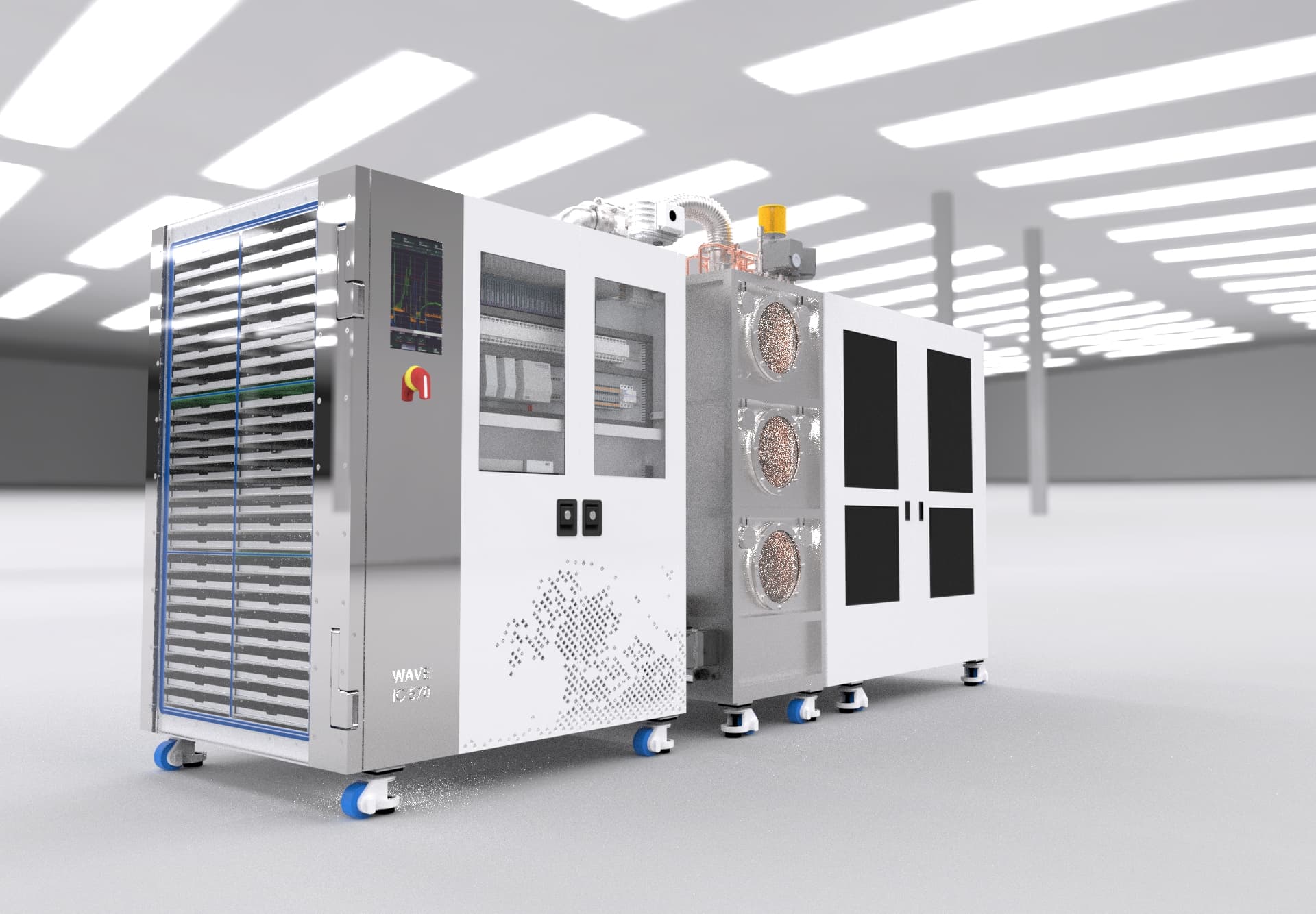
From single-ingredient batches to high-volume mixed vegetable lines — WAVE builds the machine for your production goals.
Explore WAVE MachinesFrequently Asked Questions
What vegetables can be freeze dried?
Most vegetables work well: peas, corn, peppers, onions, mushrooms, broccoli, green beans, carrots, spinach, kale, and tomatoes. Very watery vegetables like lettuce or cucumber produce low yield. Root vegetables benefit from blanching or cooking first.
Do you need to blanch vegetables before freeze drying?
It depends on the vegetable. Broccoli, green beans, carrots, and peas benefit from brief blanching to preserve colour and nutrition during storage. Peppers, onions, mushrooms, and tomatoes can be freeze dried raw without issues.
How long do freeze dried vegetables last?
Properly packaged in moisture-barrier packaging with oxygen absorbers, freeze dried vegetables last 25+ years at room temperature. Once opened, they remain usable for months in a sealed container.